Was die Encounter-Liste zeigtWhat the encounter list shows
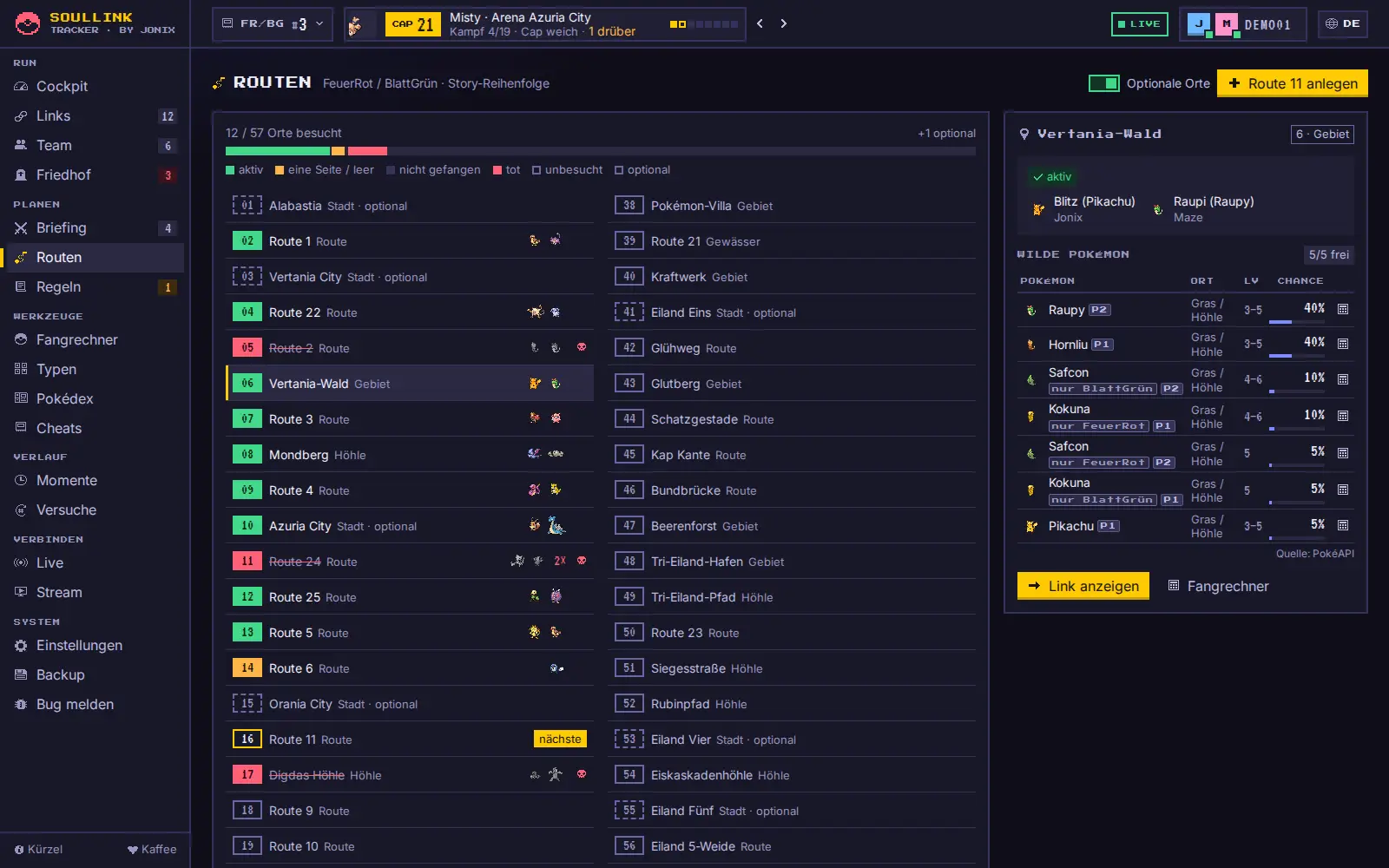
Für jeden Ort der Routenliste kennt die App die wilden Pokémon eurer Edition. Pro Art steht dort:
- Methode: Gras oder Höhle, Angel, Profi- und Superangel, Surfer, Zertrümmerer, Kopfnuss, Horden, SOS-Rufe und mehr.
- Level-Bereich und Rate. Hängt die Rate von der Tageszeit ab, steht sie getrennt für Morgen, Tag und Nacht, bei Schwert/Schild als Spanne je Wetter.
- Sonderfälle wie Schwärme, Pokéradar oder „nach der Ruhmeshalle“ und editionsexklusive Arten („nur Rot“).
- Geschenke und feste Begegnungen ohne Rate.
Ein Wert wie ≤30% ist eine Obergrenze: Die Quelle trennt dort nicht sauber (zum Beispiel Tag und Nacht in Sonne/Mond).
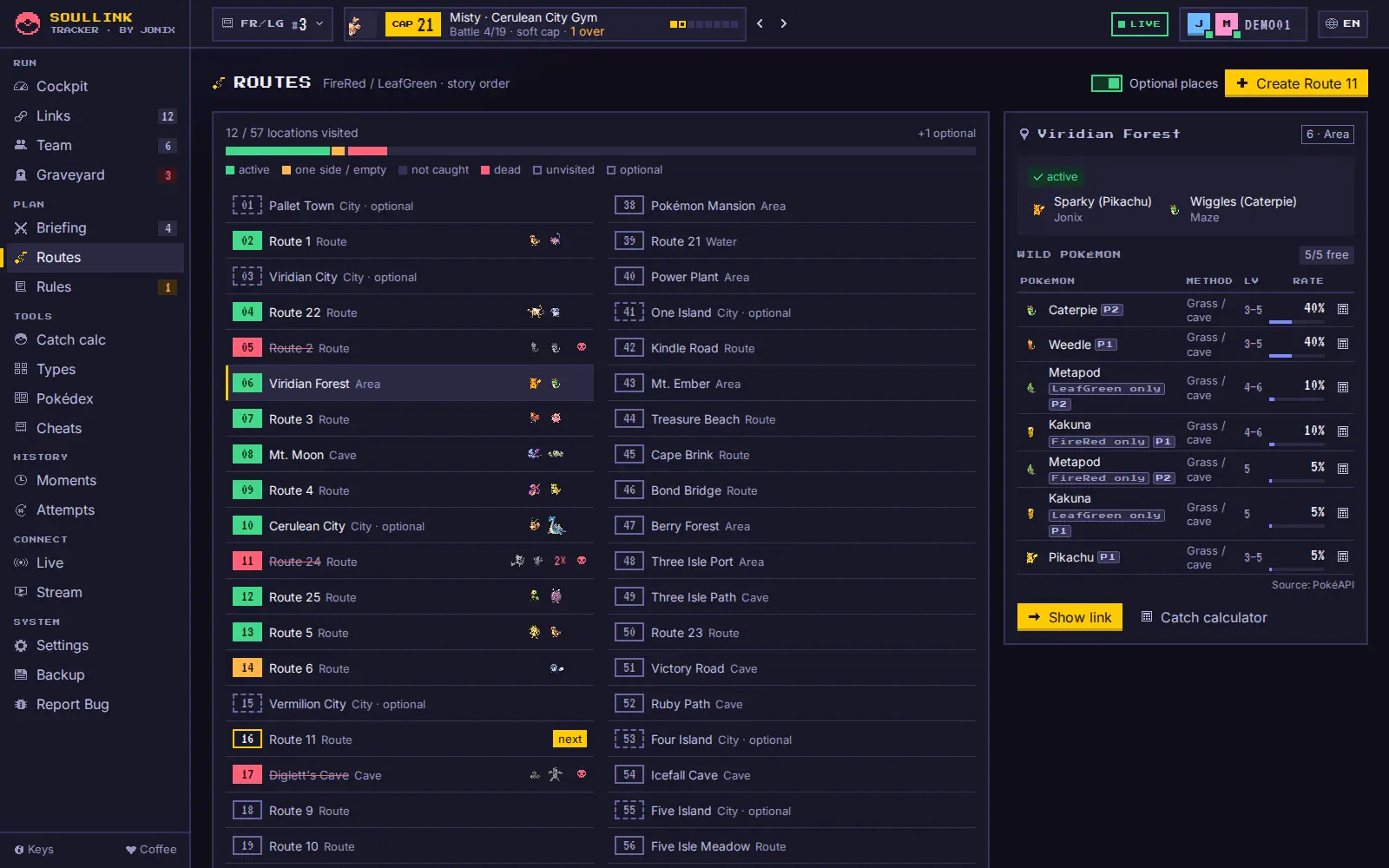
For every location in the route list the app knows the wild Pokémon of your edition. For each species it shows:
- Method: grass or cave, old/good/super rod, surfing, rock smash, headbutt, hordes, SOS calls and more.
- Level range and rate. If the rate depends on the time of day, morning, day and night are listed separately; in Sword/Shield as a range per weather.
- Special cases like swarms, Poké Radar or “after the Hall of Fame”, and version exclusives (“Red only”).
- Gifts and static encounters without a rate.
A value like ≤30% is an upper limit: the source does not separate cleanly there (for example day and night in Sun/Moon).
Wo du die Liste findestWhere to find the list
- PLANEN › Routen (Taste 6): Wähle links einen Ort aus der Liste. Die Detailspalte rechts zeigt seine Encounter-Tabelle, dazu „Link hier anlegen“ und den Fangrechner.
- RUN › Links: Unter dem Routennamen jeder Zeile mit erkanntem Ort steht der Knopf WILD mit der Zahl der noch freien Arten (zum Beispiel „WILD 5/9“). Ein Klick zeigt dieselben Details direkt an der Zeile.
Mehr zur Routenliste selbst (Fortschritt, nächste Route, optionale Orte) steht unter Links & Friedhof.
- PLAN › Routes (key 6): pick a location from the list on the left. The detail column on the right shows its encounter table, plus “Create link here” and the catch calculator.
- RUN › Links: below the route name of every row with a recognized location there is the WILD button with the number of species still free (for example “WILD 5/9”). A click shows the same details right at the row.
More about the route list itself (progress, next route, optional locations) is in Links & graveyard.
Dupes: was ausgegraut wirdDupes: what gets greyed out
Die Markierung folgt genau euren Regeln:
- Dupes-Klausel an: Die ganze Evolutionslinie zählt. Habt ihr ein Glumanda, ist auch Glutexo „verbraucht“.
- Species-Klausel (ohne Dupes): nur dieselbe Art.
- Ob gefangen oder schon gesehen zählt und ob die Klausel für jeden einzeln oder für beide gilt, stellt ihr in den Regeln ein. Links im Friedhof zählen mit.
Ist eine Art für alle Spieler verbraucht, ist die Zeile grau und durchgestrichen. Gilt sie nur für einen von euch als verbraucht, steht ein kleines P1 oder P2 daneben. Sind Dupes- und Species-Klausel aus, wird nichts ausgegraut.
Mit der Shiny-Klausel dürft ihr ein Shiny trotzdem fangen – die Liste zeigt nur den Normalfall.
The marking follows your rules exactly:
- Dupes clause on: the whole evolution line counts. If you have a Charmander, Charmeleon is “used up” too.
- Species clause (without dupes): only the same species.
- Whether caught or already seen counts, and whether the clause applies to each player or to both, is set in the rules. Links in the graveyard count as well.
If a species is used up for every player, its row is grey and struck through. If it is used up for only one of you, a small P1 or P2 appears next to it. With the dupes and species clause off, nothing is greyed out.
With the shiny clause you may still catch a shiny – the list only shows the normal case.
Woher die Daten kommen – und was fehltWhere the data comes from – and what is missing
Die Encounter stammen aus PokéAPI und werden mit der App ausgeliefert – beim Öffnen einer Route wird nichts aus dem Internet geladen. Die Quelle hat ein paar bekannte Lücken, die der Tracker ehrlich anzeigt statt zu raten:
- Strahlender Diamant/Leuchtende Perle: keine Encounter-Daten.
- Omega Rubin/Alpha Saphir: fast nur Horden, Zertrümmerer und feste Begegnungen, Wasserrouten fehlen.
- Schwert/Schild: nur das Hauptspiel, ohne DLC-Gebiete und Max-Raids.
- Einzelne Orte ohne Daten zeigen einen Hinweis statt einer leeren Tabelle.
The encounters come from PokéAPI and ship with the app – opening a route loads nothing from the internet. The source has a few known gaps, which the tracker shows honestly instead of guessing:
- Brilliant Diamond/Shining Pearl: no encounter data.
- Omega Ruby/Alpha Sapphire: almost only hordes, rock smash and static encounters; water routes are missing.
- Sword/Shield: main game only, without DLC areas and Max Raids.
- Single locations without data show a notice instead of an empty table.